

Preparing for your VicRoads driving test involves more than practising your driving skills. Bringing the right documents, using a compliant vehicle, and completing a few essential checks beforehand can prevent unnecessary cancellations.
This complete checklist covers everything you need to arrive prepared, confident, and ready to give your best on test day.
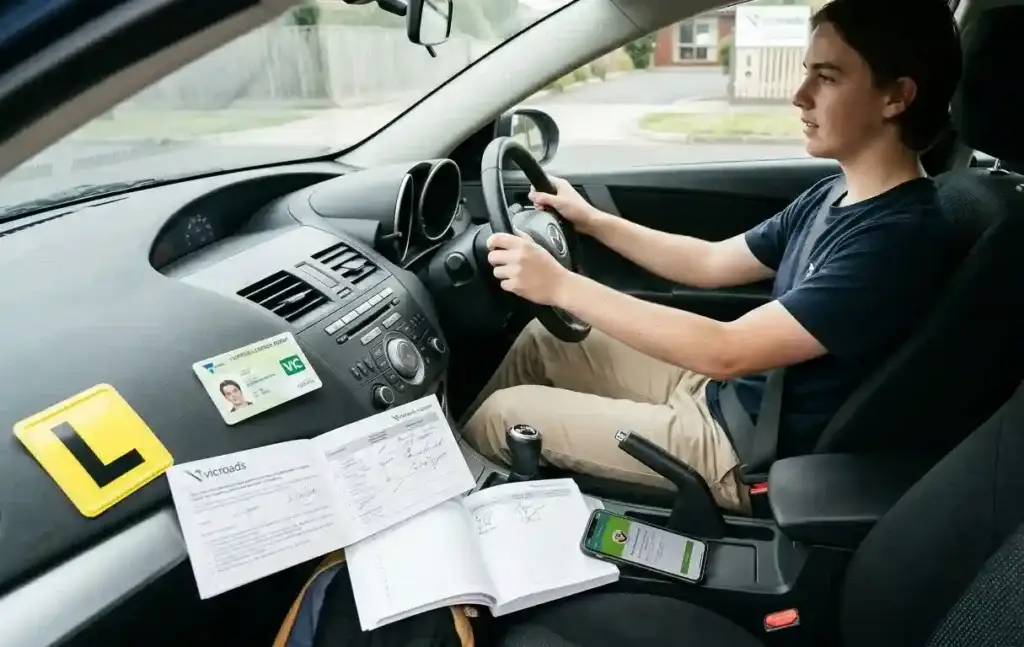
What Should You Bring to Your VicRoads Driving Test?
Bring your learner permit, your completed myLearners record or log book, and a vehicle that meets VicRoads requirements. Overseas licence holders will need additional documents, covered below.
Essential Documents
You need proof that you’re eligible to sit the test before the examiner will even look at your car. That means your learner permit and, if you’re under 21, your declared 120 hours of supervised driving.
If you’re still not confident, a few sessions with an instructor before test day can make a real difference. If you’re still building confidence, professional driving lessons in a dual-control car can help you walk in knowing exactly what to expect.
Required Identification
If your learner’s permit is lost, damaged, or you simply forgot it, you can sometimes use original evidence of identity documents instead. Don’t rely on this as a backup plan, though, since not every test centre will accept it without your permit number on file.
Driving Test Booking Confirmation (Optional but Helpful)
You don’t strictly need your booking confirmation on paper, since VicRoads can look you up by your permit details. It’s still handy to have on your phone, especially if there’s any mix-up with your appointment time or location.
Which Documents Are Required?
Most learner drivers need their learner permit card or digital driver’s licence. If you’re under 21, you also need proof of your completed supervised driving hours through the myLearners app or your paper log book.
Learner Permit Card
This is the main document VicRoads checks before your test starts. If you use the myVicRoads digital driver’s licence on your phone, that’s accepted in place of the physical card.
Evidence of Identity Documents
If you’ve lost your permit, bring originals of things like your birth certificate, passport or Medicare card. Photocopies generally aren’t accepted, so dig out the real documents the night before.
myLearners App or Log Book
If you’re under 21, you need to have logged at least 120 hours of supervised driving, including a minimum of 20 hours at night. Once you’ve completed your hours, you declare them through the myLearners app, or your supervising driver signs off your paper log book if you haven’t gone digital.
| A mistake we see often. Some learners fill in every page correctly for months, then write up their final session sitting in the car park outside the test centre. VicRoads won’t accept log book entries made on the day of your test, no matter how accurate they are. We tell every learner to record their last session the night before, even if that means logging a shorter drive than they’d planned. It’s also worth photographing every completed page as you go, so a lost or damaged log book doesn’t mean starting your hours over again. |
Overseas Driver Licence (If Applicable)
If you’re converting from an overseas licence and your country isn’t on the recognised list for direct conversion, you’ll need to bring your original overseas licence along with a NAATI certified translation if it’s not in English. Your test booking confirmation will usually flag if this applies to you.
Does Your Vehicle Meet VicRoads Requirements?
Your test vehicle must be registered, roadworthy, clean, and fitted with a manual handbrake the examiner can reach from the passenger seat. Cars that don’t meet these conditions won’t be accepted, and your test won’t go ahead.
| Requirement | What VicRoads is checking |
| Registration | Current and not on a restricted permit |
| Handbrake | Manual, centrally mounted, reachable from the front passenger seat |
| Speedometer | Clearly visible from the passenger seat, not just the driver’s |
| Lights and mirrors | All working, including both side mirrors |
| Demister | Functional, even if you don’t think you’ll need it on the day |
| L plates | Displayed front and back, visible from 20 metres |
Registration and Roadworthiness
The car needs current registration with no warning lights on the dashboard; things like an airbag light or check engine light can be enough to have the vehicle rejected. A space saver spare tyre fitted as the actual driving tyre is also a problem, since it isn’t considered roadworthy for normal driving.
Manual Handbrake Requirements
This is the rule that catches the most learners out. VicRoads doesn’t accept vehicles with an electronic or foot-operated park brake for a solo test, because the examiner needs to be able to physically engage the handbrake from the passenger seat if something goes wrong.
A lot of newer family SUVs now use a push-button park brake, so it pays to check this well before test day rather than assuming your car is fine.
| Something we see a lot. A learner turns up in a perfectly good family car, and the test never even starts because the handbrake is electronic. It happens most often with newer SUVs and small hatchbacks, since manufacturers have been quietly phasing out the traditional lever for years. We tell our learners to sit in the passenger seat of whatever car they’re using and physically pull the handbrake themselves, not just glance at the dashboard and assume it’s fine. |
Working Lights, Mirrors and Seatbelts
Every light needs to work, including headlights, indicators, brake lights, and reverse lights included. Seatbelts need to be in good condition for every seat, even if you’re the only passenger booked in.
Speedometer Visibility
The examiner sits in the front passenger seat for most tests, so they need to be able to read your speed without leaning across you. If your dashboard display is angled hard towards the driver, or it’s a small digital readout tucked behind the wheel, it might not pass.
Windscreen, Demister and Tyres
Cracks that sit in the driver’s line of sight are an issue, as is a windscreen so dirty it affects visibility. Tyres need adequate tread, and a demister that doesn’t clear the windscreen properly can also be flagged, even on a dry day.
Automatic vs Manual Vehicles
If you sit your test in an automatic car, your probationary licence will carry an automatic-only condition. To remove that restriction later, you’ll need to apply for and pass a separate driving assessment in a manual vehicle; it doesn’t happen automatically just because time passes.
What Should You Check Before Leaving Home?
A final check before you leave can help you avoid unnecessary stress and make sure nothing important gets left behind. Give yourself ten minutes the night before, rather than trying to remember everything as you’re walking out the door.
Check Your Documents
Lay out your learner permit, your declared hours, and any identity documents you might need. Take a photo of them on your phone as a backup in case anything goes missing on the way.
Inspect Your Vehicle
Walk around the car and check the lights, mirrors, tyres, and the handbrake one more time. It only takes a few minutes, and it’s far better than finding out about a problem when the examiner does.
Confirm Your Appointment Time
Double-check the time and the test centre location, since some learners get their morning and afternoon slots mixed up. If you’re not sure which centre you booked, your confirmation email or your MyVicRoads account will have it.
Plan Your Travel Route
Factor in traffic, especially if your test is during school drop-off or pick-up times.
Arrive at Least 15 Minutes Early
This gives you time to park, get your documents out, and take a breath before you’re called in.
Common Reasons Driving Tests Are Cancelled
Driving tests are commonly cancelled because of missing documents, an unsuitable vehicle, late arrival, or incomplete learner requirements. Almost all of these are avoidable if you spend ten minutes checking your documents and your car the night before.
Forgetting Your Learner Permit
Without it, the test generally can’t proceed, even if you can prove your identity another way. This is the single most preventable reason a test gets cancelled.
Incomplete Log Book or myLearners Record
If your hours aren’t declared correctly, the system won’t show you as eligible. Check your myLearners app the week before, not the morning of your test.
Arriving Late
VicRoads books appointments tightly, so there’s rarely room to slot in a late arrival. Losing your fee for over five or ten minutes is a frustrating way to delay getting your Ps.
Invalid Registration or Mechanical Issues
Letting registration lapse, even by a day, or driving with an obvious mechanical fault, will get the test stopped before it starts. Check your rego sticker or the myVicRoads app, not just your memory of when you last renewed.
Test Day Tips to Help You Stay Calm
Preparing the night before, arriving early, and focusing on safe driving rather than perfection can help reduce test day nerves.
Get Plenty of Rest
A tired driver makes more small mistakes, like missing a head check or reacting slowly to an instruction. Treat the night before like the night before any important appointment, not an excuse for a late one.
Eat Before Your Test
Low blood sugar doesn’t mix well with concentration. A proper breakfast or lunch beats trying to focus on an empty stomach.
Complete a Warm-Up Drive
If you can, drive somewhere ordinary on the way to your appointment rather than sitting in the car cold. It settles your hands on the wheel before the part that actually counts.
Listen Carefully to Instructions
If you don’t catch an instruction clearly, it’s fine to ask the examiner to repeat it, this won’t cost you points. Guessing what they meant and getting it wrong is a far bigger risk than asking.
Something specific to Victoria worth knowing.
On multi-lane roads, you’re allowed to turn into any open lane, so an examiner might ask you to turn left into the right-hand lane or right into the left-hand lane. It catches learners out because it feels wrong even though it isn’t, and second-guessing the instruction mid-turn is where mistakes happen. We make sure our learners practise this exact scenario before test day, so it isn’t a surprise the first time it comes up for real.
Stay Focused on Safe Driving
The test isn’t marking you against a perfect drive; it’s checking whether you can drive safely on your own. Head checks, mirror checks, and sticking to the speed limit matter more than looking smooth.
One of the most common ways learners fail
Learners fail tests by matching the traffic around them instead of the actual rule, easing through a stop sign because the cars ahead did, or letting their speed creep up because everyone else on the road is doing the same. We remind every learner that the test is checking what you do on your own, not what the car in front of you happens to get away with.
| Final Tips To Stay VicRoads Driving Test Day Ready:Most test day stress comes down to two things: paperwork and the car, and both are entirely sorted before you even leave your driveway. Run through the quick facts box one more time tonight. Check your handbrake with your own hands rather than trusting your memory. You’ll walk in better prepared than most. Quick Facts: Arrive at least 15 minutes earlyBring your learner permit card or digital driver licenceBring your completed myLearners record or paper log bookUse a registered, roadworthy vehicle with a manual handbrakeDisplay L plates on the front and back of the carThe practical test costs $51.80, plus a $21.50 appointment booking fee. Both apply when you book online through myVicRoads. Bring your glasses or contact lenses if your eyesight test says you need them |
Read More: What Does a VicRoads Assessor Actually Look for During Your Test?
Frequently Asked Questions
What’s the earliest age I can actually sit the driver’s test?
You need to be at least 18, even if you finish your 120 hours and your 12 months on Ls earlier than that. Some learners hit their logbook target at 17 and then have to wait it out, which is worth planning lessons around.
Can my instructor or a parent come along in the car?
Mostly no. If you’re using a dual control instructor car, the examiner moves to the back seat, and your instructor sits in the front passenger seat, but they can’t speak to you once the test starts.
Do I need to bring my glasses if I usually wear them?
Yes, bring them along even if you only wear them sometimes for driving. If your eyesight test result says you need vision correction, the testing officer checks for this before you start.
Will the test be cancelled if it’s raining?
No, VicRoads still runs tests in the rain, since handling wet roads is part of what’s being assessed. Heavy rain might make a manoeuvre like reverse parking trickier, but it’s not a reason for the test to be called off.
What happens if my car fails the pre-drive check?
If your vehicle doesn’t meet the requirements, the test doesn’t go ahead, and you don’t get your fees back. You’ll need to book and pay for a new appointment, which is exactly why getting the car checked the day before makes such a difference.st with yourself about your own gaps is not a weakness. It is the habit that keeps you safe long after the logbook is full.