

Most drivers don’t crash because they weren’t looking. They crash because they were looking but not really seeing.
There’s a difference between spotting something on the road and understanding what it means. That gap between the two is where most preventable crashes happen.
Reading a road hazard isn’t about faster reflexes. It’s about training your brain to ask the right question earlier. Not “is that dangerous?” but “what could that become in the next few seconds?”
That shift is something any driver can learn.
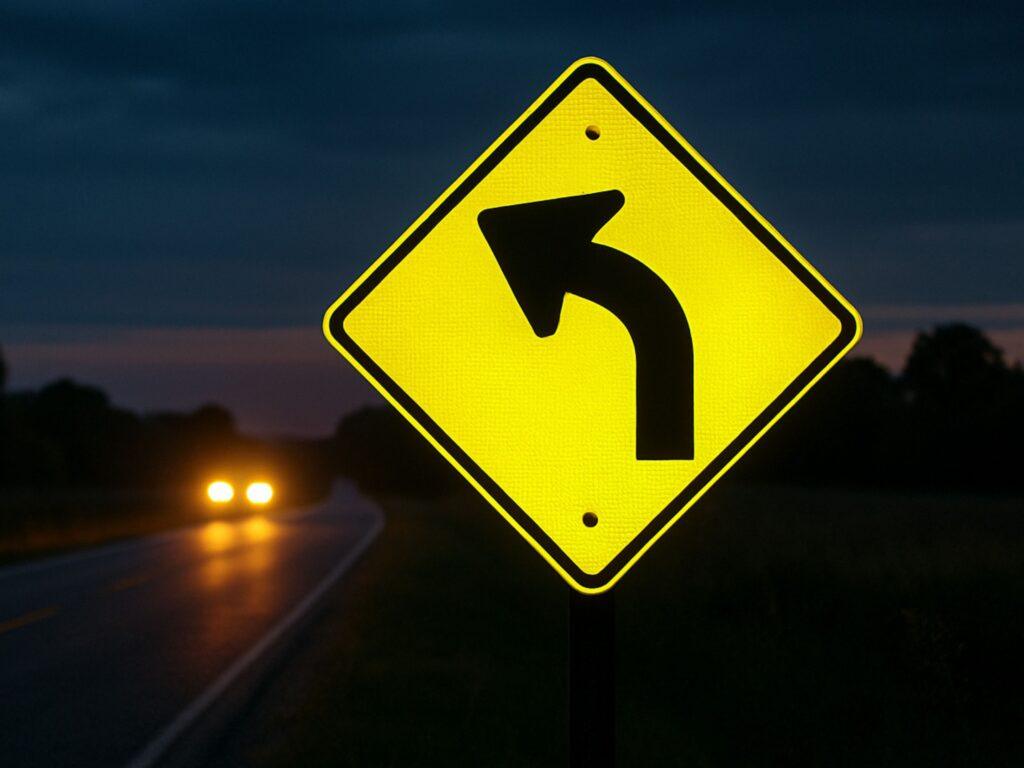
The Gap Between Seeing and Understanding
What “reading” a hazard actually means
Reading a road hazard requires you to question the situation before it fully develops. Not “is that dangerous?” but “what is this likely to become within the next three seconds?”
This distinction is critical. Because once a situation is clearly dangerous, your response options are already limited. At 100 km/h, a vehicle travels about 28 m/s.
A one-second delay in recognising a developing hazard adds 28 metres to your reaction distance before braking even begins.
At that speed, braking distance on a dry sealed road is approximately 70 to 80 metres once the brakes are applied. Factor in a reaction time of 1.5 seconds, which is standard for an attentive driver, and your vehicle travels an additional 42 metres before braking even starts. Total stopping distance exceeds 110 metres.
There is no margin for hesitation.
Four Early Warning Signs Worth Paying Attention To
Hazards rarely appear fully formed. They telegraph themselves first.
1. Unusual Position or Stillness on the Road
A pedestrian standing at the edge of a footpath is not always about to step out. But if they are there looking at their phone, it often means they are distracted and may step out without checking for traffic.
Stillness in the wrong place can be a warning sign. A bike stopped beside a bike lane, a car waiting at a roundabout exit, or a dog sitting near a driveway can all mean movement is about to happen, and it may be sudden or hard to predict.
2. Vehicles moving too slowly for the context
A ute travelling at 40 km/h in a 60 zone is not just frustrating. It can signal a problem, such as a mechanical issue, a driver searching for an address, or someone about to turn without indicating.
In rural areas, it may point to livestock on the road ahead, especially around a bend you cannot yet see.
A slow vehicle should be treated as a warning sign, not simply something to pass.
3. The hidden second hazard
Experienced drivers understand that hazards often come in pairs. You may slow down for a fallen branch, then focus so much on it that you miss a motorcyclist approaching quickly from behind.
Or you notice a kangaroo on the left side and forget to check for a second one nearby, which is common.
Heavy vehicle and defensive driving programs across Australia teach drivers to actively look for a ‘second hazard,’ recognising it as a major factor in multi-vehicle crashes on rural highways.
4. Changed road surface texture or colour
A patch of road that looks darker or shinier than the rest in summer can mean the bitumen has softened, reducing grip.
On roads like the Great Ocean Road or the Pacific Highway in northern NSW, surface changes after rain can affect how well your tyres hold, especially through corners.
Many drivers only notice these changes after they are already on them, by which point there is not enough time to adjust speed or line safely.
How to Create More Response Time While Driving
Extend your visual horizon
The most effective way to gain more response time is to look further ahead. Australian road authorities and the National Road Safety Strategy highlight the following distance and visual scanning as key crash prevention tools, even more important than braking skill or vehicle performance.
Aim for 12 to 15 seconds ahead
Most drivers only look about four seconds ahead. Skilled drivers push that out to 12 to 15 seconds. At 100 km/h, this means your focus should be around 330 to 420 metres down the road, giving you more time to spot and assess risks.
Use a fixed point to check your gap
Pick a point ahead, such as a sign or tree, and count how long it takes to reach it. If it is less than four seconds, your forward view is too short, and you need to adjust. This simple habit helps you stay aware of your spacing.
Adjust for limited visibility
If you cannot see far ahead due to a bend, hill, or crest, treat that as a warning. Slow down and increase your focus. Limited sight distance means less time to react, so your speed should match what you can safely see.
Follow the legal requirement
Australian Road Rules require you to drive at a speed that allows you to stop within the distance you can see is clear. This is not just guidance. It is a legal responsibility that applies to all roads, in every state and territory.
Why Road Type Changes Everything
Road type changes how you read hazards
The way you spot and assess risks must change with the road you are on. A quiet suburban street in Adelaide’s inner north needs a very different approach compared to a two-lane highway in the Northern Territory.
Urban roads mean more hazards, less time
In city and suburban areas, hazards appear more often. Pedestrians, parked cars, and intersections all increase risk. You usually have less time to react because everything is closer and more compressed.
Rural roads mean fewer hazards but a higher risk
On rural roads, hazards are less frequent but more dangerous. Speeds are higher, stopping distances are longer, and lighting is often poor at night. Wildlife is also a major risk and does not react predictably to vehicles.
Watch speed zone changes closely
Transitions from high-speed zones to lower ones need extra care. Moving from 110 km/h to 60 km/h near a regional town is a known risk point. Many drivers misjudge their speed as they slow down.
Your speed may feel slower than it is
After driving at high speed for a long time, 60 km/h can feel slower than it actually is. In reality, many drivers are still travelling at 75 to 80 km/h. This difference can greatly increase the risk if something unexpected happens in the first part of that lower speed zone.
Fatigue Changes How You Read Hazards
The Transport Accident Commission in Victoria and similar bodies in other states have published data showing that even mild fatigue impairs the ability to detect and categorise hazards, not just reaction speed. You can look directly at something and simply not register it as a threat when you otherwise would.
The insidious part is that the same fatigue affecting your hazard recognition also affects your ability to notice that your hazard recognition is compromised. It’s a blind spot that feels like clarity.
If you’re on a long drive, schedule a genuine 15-minute break every two hours.
Not just a fuel stop where you’re back behind the wheel in under three minutes. The rest needs to be long enough to genuinely reduce fatigue.
Not “take breaks when you feel tired,” because by then the damage to your hazard perception is already done.
The Honest Limitation of This Skill
Hazard perception is a skill you can improve, but it is not perfect. Some risks cannot be predicted. A tyre blowout from the car ahead, black ice on a road that looks dry, or a driver running a red light at speed can happen without warning.
What this skill really does is cut down the number of situations where a danger could have been seen early but was missed. These make up most preventable crashes. If you spot a risk sooner, you give yourself more time to act. And on the road, time is what keeps you safe.
Here is something simple to try on your next drive. Pick something about 300 metres ahead, whether it is a parked car, a pedestrian, or a driveway, and say out loud what might happen next.
For example, “that car could pull out,” or “that pedestrian is not looking”, or “that driveway is partly blocked.” Do this for a few minutes on a road you know well.
You will notice how many things you were seeing but not really thinking about. That gap is where better hazard awareness starts.
Data sources: