

If you’ve spotted a blue P plate on a car and thought, “Hang on, what’s that about?” — you’re not the only one.
While red and green P plates are standard across Australia, blue P plates aren’t part of the regular licensing system. So, what do they mean? Are they official? Do they come with any rules? Let’s break it all down in a way that actually makes sense.
What Is a Blue P Plate?
A blue P plate isn’t part of the official graduated licensing scheme in Australia. Unlike the red P plate (for P1 drivers) and the green P plate (for P2 drivers), a blue P plate is not legally required by any state or territory transport authority.
But they do pop up from time to time.
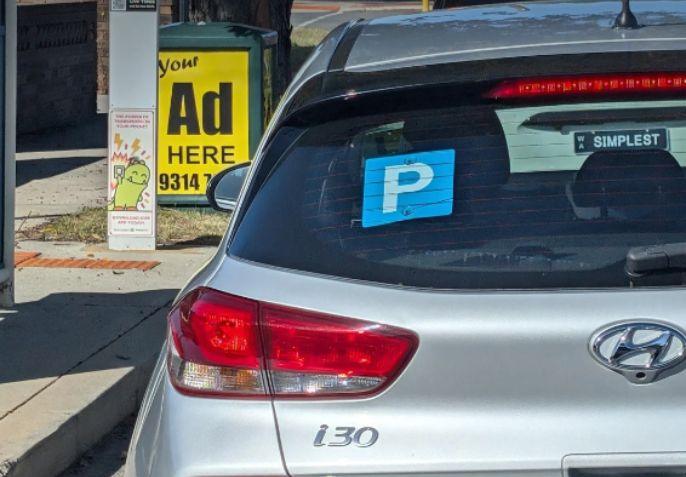
Blue P plates are usually used voluntarily. Some people use them to show they’ve passed their provisional period but still feel like they’re learning. Others may use them in situations where they’ve transferred from overseas licences, are getting used to Australian roads, or just want other drivers to cut them a little slack.
They’re more like a signal — “Hey mate, I’m still getting confident behind the wheel” — rather than a legal requirement.
Are Blue P Plates Legal?
They’re not illegal — but they’re not official either.
Since blue P plates don’t represent a licensing class, there’s no law saying you have to use them. And, importantly, there’s no law stopping you either — unless you’re displaying them in a way that confuses or misleads other drivers.
Let’s say someone drives with a blue P plate that looks too much like a real P1 or P2 plate — they could be asked to remove it. Especially if police think it’s being used to pretend you’re a learner or provisional driver when you’re not.
So, if you’re using one, make sure it’s obviously not an official red or green plate. Keep it distinct — like clearly blue with no resemblance to the government-issued ones.
CHECK MORE: L and P Plate Rules in Victoria: What Every Driver Needs to Know
Where Are Blue P Plates Most Common?
They’re not tied to any specific region, but you might hear about blue P plate Victoria cases more often. In Victoria, like other states, people occasionally use blue P plates informally to indicate they’re still gaining confidence post-provisional.
Again, it’s more of a cultural or personal decision, not something regulated.
Why Do Some People Use Them?
Not everyone feels 100% confident right after getting off their green Ps.
Here’s why some drivers stick a blue P plate on their car:
- They want to ease back into full licence driving.
- They feel nervous driving in new areas or conditions.
- They’ve had a long break from driving.
- They’ve transferred from another country and are adjusting to Aussie roads.
- They just want other drivers to be patient.
It’s like saying, “Go easy on me, mate — I’m still learning a bit.”
What About Red and Green P Plates?
While blue P plates are unofficial, red and green ones definitely are not. They’re legally required in every state and territory for provisional drivers.
Here’s a quick overview to keep things clear:
- Red P plates are for P1 drivers (usually for the first 12 months after passing your learner test).
- Green P plates are for P2 drivers (generally the second stage before moving to a full licence).
These must be displayed properly, or you’ll risk copping a fine and demerit points.
CHECK OUR DRIVING LESSONS:
- Driving Lessons in Pakenham
- Automatic Driving Lessons in Melbourne
- Manual Driving Lessons in Melbourne
- Manual Driving Lessons in Pakenham
- Automatic Driving Lessons in Pakenham
Displaying P Plates Correctly (For Red and Green Ps)
If you’re on a P1 or P2 licence, you must display your P plates properly:
- They need to be at least 14.6cm by 14.6cm.
- The “P” should be red (for P1) or green (for P2), on a white background.
- The plate must be clearly visible from 20 metres away — front and back of the car, rear only for motorbikes.
- You can buy them from servos, big retailers, or even print them at home using official templates.
And yes, if you don’t follow these rules, you could be fined and lose 2 demerit points. Harsh? Maybe. But that’s the law.
Also, if someone drives your car and they’re not a P plate driver, they’re supposed to remove the plates before heading off. If they forget and get caught, they might be fined, too.
Should You Use a Blue P Plate?
It’s totally up to you.
If it gives you a bit more confidence and helps manage the expectations of other drivers, go for it. Just make sure it’s clear that it’s not an official P1 or P2 plate.
And don’t use it to get out of following full licence rules — that definitely won’t work if you’re pulled over.
Think of it like a bumper sticker that says “Still Learning.” Not necessary, but sometimes helpful.
Final Thoughts
Blue P plates aren’t about following rules — they’re about feeling comfortable on the road. If one helps you drive with more confidence and keeps things safe, then why not? Just don’t expect it to come with special treatment from the law.
Drive safe. Stay chill. And if you’re rocking a blue P, we get it — we’ve all been there.
FAQs
Q: Is a blue P plate legally required in any state?
A: No. Blue P plates are not recognised by any official Australian licensing authority. They’re used voluntarily by some drivers for personal reasons.
Q: Can I be fined for using a blue P plate?
A: Not usually, unless the plate looks too similar to official red or green P plates and misleads others.
Q: Do blue P plates give any legal driving exemptions?
A: Nope. If you’re on a full licence, you’re expected to follow all rules for full licence holders — no speed limits or passenger restrictions like provisional drivers have.
Q: Where can I buy a blue P plate?
A: You’ll likely need to make one yourself or find one online. They’re not sold officially in stores because they’re not part of the standard licensing system.
Q: Are blue P plates common in Victoria?
A: You might see them in Victoria occasionally, especially among drivers who’ve just finished their green Ps or are easing into full licence driving — but again, they’re unofficial.
Might be helpful: https://www.vicroads.vic.gov.au/licences/your-ps/a-guide-to-being-on-your-p-plates