

Most drivers only think about the weather when it starts causing problems. Conditions can change fast, and when they do, grip drops, visibility falls, and traffic becomes harder to read.
Weather affects how your tyres hold the road, how quickly you can stop, and how well you can react. Yet many drivers rely on habit instead of adjusting to the conditions.
This article explains what changes in different weather and what you should do to stay safe and in control.
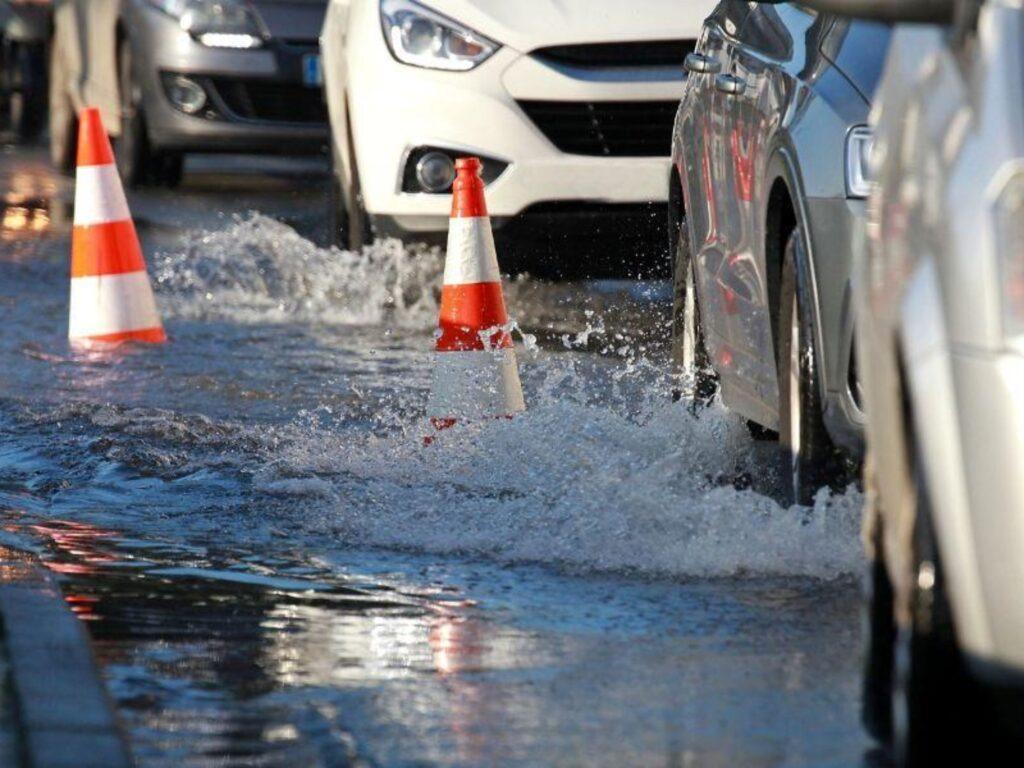
How Wet Roads Extend Your Stopping Distance
The standard rule taught in Australian driving schools is a two-second following gap in dry conditions. In the wet, that doubles to four seconds minimum.
Here is the part that surprises most drivers. The first 10 to 15 minutes of rain are often the most dangerous. That is when water mixes with accumulated oil and rubber dust on the road, creating a surface that behaves almost like black ice.
Once sustained rain washes the surface clean, grip actually improves. So that light drizzle after a dry week is riskier than heavy rain that has been falling for an hour.
What Aquaplaning Actually Feels Like Behind the Wheel
Most drivers picture aquaplaning as the car spinning sideways like something out of an action film. That is not usually how it plays out.
In real life, it is far more subtle. You might notice the steering feeling unusually light, or a slight drift that does not quite match what your hands are doing. If it happens to your driven wheels, the engine might suddenly rev higher than expected.
That is aquaplaning, and it tends to happen at speeds and conditions that feel entirely normal.
If your tyre tread is below 3mm, wet roads become genuinely dangerous, even at 60 km/h. The legal minimum across all Australian states is 1.5mm, but the NRMA recommends swapping your tyres out at 3mm. There is a big difference between legal and safe.
If you do start aquaplaning, do three things:
- Lift your foot off the accelerator slowly
- Keep the wheel pointed straight
- Do not touch the brakes
Your tyres need a moment to find grip again. Any sudden braking or steering input during that window usually makes the situation worse.
How Extreme Heat Affects Your Vehicle and Your Driving
Rain gets all the attention. But in Australia, heat is just as dangerous behind the wheel.
Most drivers do not think twice about a hot day. They should.
Your tyres are under more stress than you realise
Tyre pressure rises as temperature climbs. For every 10 degrees Celsius increase, expect your tyre pressure to go up by around 1 to 2 PSI.
Now think about what happens on a 40-degree day in Perth or Adelaide. The bitumen surface can hit 60 to 70 degrees. If your tyres are already sitting at the top of the recommended pressure range, that extra heat can push them into blowout territory.
Most drivers never connect the two. Until something goes wrong.
Check your tyre pressure first thing in the morning, before you drive anywhere. Checking it after a long summer run will give you a falsely high reading, and you will think everything is fine when it is not.
Heat does not just affect your car. It affects you.
Research has found that sustained temperatures above 35 degrees can measurably reduce cognitive performance. That includes reaction time, decision-making, and focus.
This is not about feeling a bit sluggish on a warm afternoon. The effect is a genuine cognitive impairment, comparable to mild fatigue.
If you are driving through a heatwave, treat it with the same respect you would give a long night drive. Your brain is working harder than usual just to keep up.
How Heat Mirage Creates Hazards on Country Roads
If you are driving on long straight roads in outback New South Wales, Queensland, or the Northern Territory, heat mirage is a genuine road hazard. The visual shimmer on the road can obscure animals, debris, or vehicles, particularly at distance.
And when you add heat fatigue on top of that, the risk goes up fast. Long distances plus high temperatures are a combination that shows up repeatedly in rural road toll statistics.
The standard advice is to stop every two hours. In serious heat, bring that down to every 90 minutes. Your reaction time and concentration drop faster than you think when it is 40 degrees outside and the air con is working overtime.
How Fog Affects Visibility and What Drivers Should Do
Fog does not get much airtime in Australian driving conversations. But if you live near or travel through the Snowy Mountains, the Adelaide Hills, Victoria’s Great Ocean Road corridor, or inland areas like Orange and Bathurst in New South Wales, dense fog is a real and regular thing, especially on autumn and winter mornings.
The biggest mistake drivers make is reaching for the high beams. It feels like the right call. It is not.
High beams bounce off the water particles in fog and throw the light straight back at you. That actually makes visibility worse. Use your low beams instead. They angle toward the road surface where you need the light most. If your car has dedicated front fog lights, switch them on.
Speed is where it gets confronting.
In fog, you should only be travelling fast enough to stop within whatever distance you can actually see. If visibility is 30 metres, your stopping distance needs to be 30 metres or less.
At 60 km/h on a wet road, your stopping distance is around 40 metres. That means 60 km/h in 30-metre visibility is already too fast.
The numbers do not leave much room for comfort. But that is exactly the point.
How Strong Wind Conditions Affect Vehicle Control
A strong crosswind does not feel dangerous at first. The car nudges slightly, you correct, and you think nothing of it.
The problem comes in three specific situations:
- Emerging from a cutting or from behind a large truck
- Overtaking or being overtaken by a B-double
- Crossing an exposed high-clearance bridge, such as those on the Hume Highway or in coastal and mountainous regions
In each case, the wind changes suddenly rather than gradually, and your correction reflex can be too aggressive. Grip the wheel at the 9 and 3 position (not 10 and 2), which gives you more control range when a gust hits.
Roof racks loaded with camping gear, surfboards, or luggage significantly increase your vehicle’s wind profile. A loaded roof rack on a 4WD in a 70 km/h crosswind is a very different handling situation than an empty vehicle.
Tyre Maintenance: The Most Important Pre-Wet Season Check
Most drivers update their tyres reactively, after a scare or after someone points out the wear.
The smarter approach is to check tread depth before the wet season hits. A tread depth gauge costs about five dollars at any automotive store and takes less than a minute to use.
If your tyres are sitting at 3mm or below, you are making every other piece of advice in this article harder to apply. Good technique matters, but physics still wins. Give yourself the best starting point you can.
Data Sources: